
Voice of the matter – articles section
When it comes to important issues, it’s important to have a voice. Meet the people who are saying what they see, what they hear, and what it could mean for you and your organization.
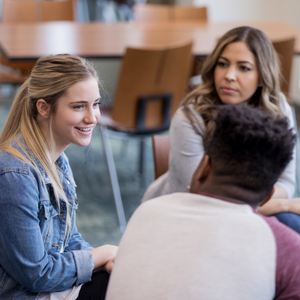
Four generations working together, rapid technological changes, and a growing need to build an inclusive culture are among the key challenges in the manufacturing sector today. At VW Poznań, the response to these processes has been the "Culture 2.0 and Diversity in Production" program, which focuses on strengthening intergenerational dialogue, developing competencies, and creating a work environment based on collaboration, respect, and the inclusion of diverse perspectives.

Modern hospitality redefines hospitality – today it's no longer just about standards, but about mindfulness and an authentic guest experience. DEI, or diversity, equity, and inclusion, ceases to be an industry acronym and becomes a daily practice: from communication methods to service design. It is thanks to DEI that a hotel can become a place where everyone feels 'at home' – regardless of their needs or identity. Inclusive hospitality not only builds guest loyalty but also strengthens teams, reducing turnover and restoring meaning to relationship-based work.

In the demanding pharmaceutical industry, is there one ideal employee model? The experience of Egis Polska shows that success lies in a completely different place – in the conscious utilization of each person's unique talents within the team. Moving away from rigid patterns towards the Gallup methodology, the organization transformed its approach to diversity, turning potential conflicts into effective collaboration. In the interview below, Monika Świerszcz (HR Department Manager), Izabela Brzezińska (External Communication Specialist), and Maja Latosińska (HR Projects Manager) at Egis Polska discuss how working with talent maps supports equal opportunities, helps overcome skepticism, and builds authentic engagement that allows the company to respond agilely to market turbulence.

As part of our collaboration with Device Europe – a technology company operating in the European market – we had the opportunity to take a closer look at an organization that consistently builds its position based on quality, innovation, and long-term development thinking. Although the company has approximately 45 employees, the scale of its DEI (Diversity, Equity & Inclusion) strategy resembles that of mature, much larger organizations. What stands out is not only a declarative approach to equality and inclusion but, above all, a solid foundation of policies, procedures, and conscious management decisions that genuinely translate into organizational culture.

Often in our work, we encounter resistance due to the belief that DEI activities only benefit selected groups. In the case of HR processes - such as recruitment, promotion, or feedback processes - striving to make them fair, inclusive, or transparent is sometimes perceived as an activity that is meant to give an advantage to certain people (e.g., women). So how do we design activities that are fair and effective, while not creating solutions that may be perceived as favoring selected people? How do you mitigate the risk of potential inequalities in your organization? Our answer is
Universal Design (UD).
What is sometimes the best step before we start changing our systems and processes in an organization? Stopping and carefully analyzing what is already working well and what can be improved.

We talk about the behind-the-scenes development of a film on neurodiversity in Orange. I am glad that Sylwia Sikorska-Ney shared the story of the project, which shows that openness to different ways of thinking can be a strength of an organization. This film is not just an image - it is a manifesto of authenticity and empathy in the workplace. Its originator and co-creator talks about where the idea came from, what the preparations looked like and what this project has changed in the company.

mBank decided to completely change the concept of its employee networks - or rather, groups of diversity ambassadors and ambassadors, as this is how these initiatives are referred to at mBank. And while in many organizations they operate on the basis of fixed, thematic groups - for example, dedicated to the LGBT+ community, women or different generations - here they decided on a completely different, innovative approach. What you will read in a moment is a very good example of agile thinking in practice: flexibility, openness to change and courage in adapting activities to the real needs of the working people. This is a story about listening, observing, learning lessons and not repeating patterns just because "that's the way it's always been done."

In a world of constant change and geopolitical instability, AMS has made a conscious decision to consistently focus on Diversity, Equity and Inclusion (DEI) activities, pursuing them through, among other things, our Employee Resource Groups (ERGs).
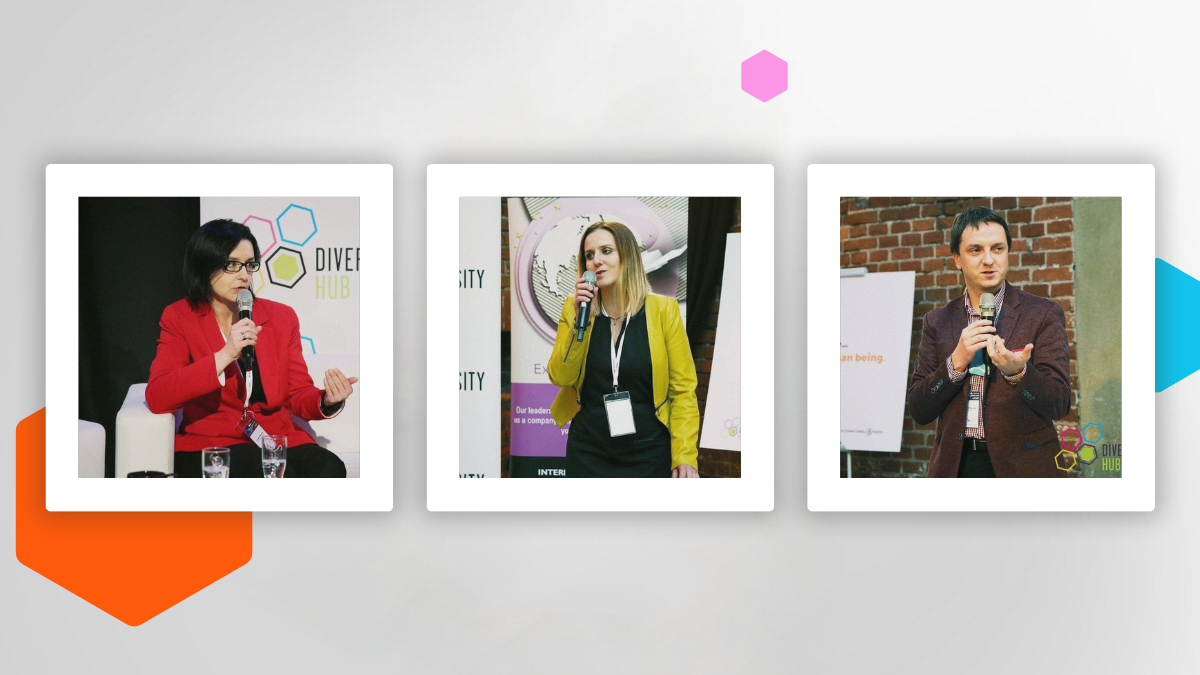
Ten years ago, we began our shared journey – with passion, uncertainty, and the conviction that diversity, equity, inclusion, and belonging could truly transform organizations. Today, looking back, we see not only the results of this work in companies and teams, but also in the attitudes of people who believe in it and bring it to life. Together with AMS, we celebrate this decade by sharing memories, experiences, and lessons that show change is possible – when you act together.