Latest DEI articles

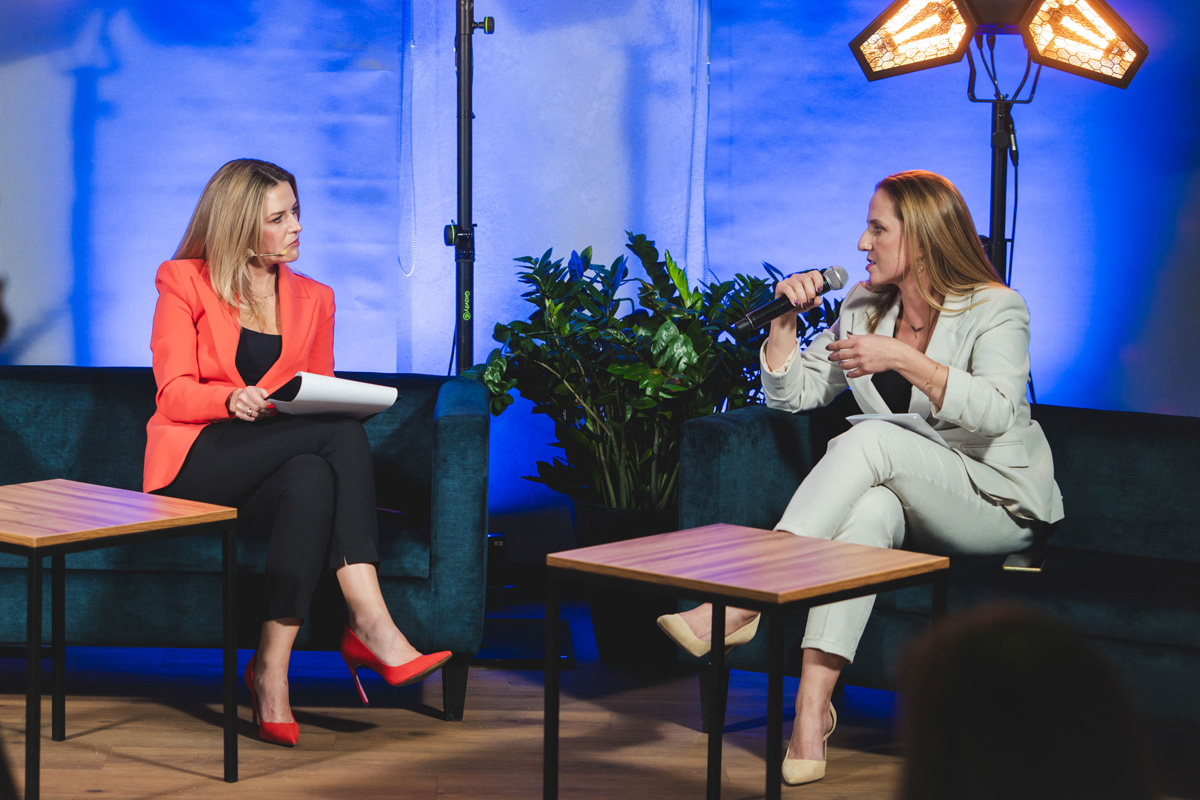
Employee Resource Groups can be much more than a series of events. At their best, they create spaces where people connect, grow, and shape organisational culture from the ground up. We spoke with Justyna Żmija, Julita Petrus and Katarzyna Urbanska, who together lead BBH's Women's Network Krakow Chapter about rebuilding a community during the pandemic, leading without formal authority, and creating a network that continues to grow because people genuinely want to be part of it.
Does the experience of motherhood affect the way people manage others? If so, what exactly changes? Do women become less effective professionally after having a child, or do they develop new competencies that strengthen their leadership role? These questions have long appeared in discussions about the labor market and in daily organizational decision-making. Many stereotypes and concerns—often unspoken—still surround women of childbearing age. Meanwhile, a study conducted by Agata Kołodyńska in 2019 shows a much more complex picture of motherhood and its impact on women in managerial roles.
See other articles
From Employee Initiative to Organisational Impact: How BBH’s Women’s Network Built a Community That Lasts
Employee Resource Groups can be much more than a series of events. At their best, they create spaces where people connect, grow, and shape organisational culture from the ground up. We spoke with Justyna Żmija, Julita Petrus and Katarzyna Urbanska, who together lead BBH's Women's Network Krakow Chapter about rebuilding a community during the pandemic, leading without formal authority, and creating a network that continues to grow because people genuinely want to be part of it.
The Impact of Motherhood on Management Style
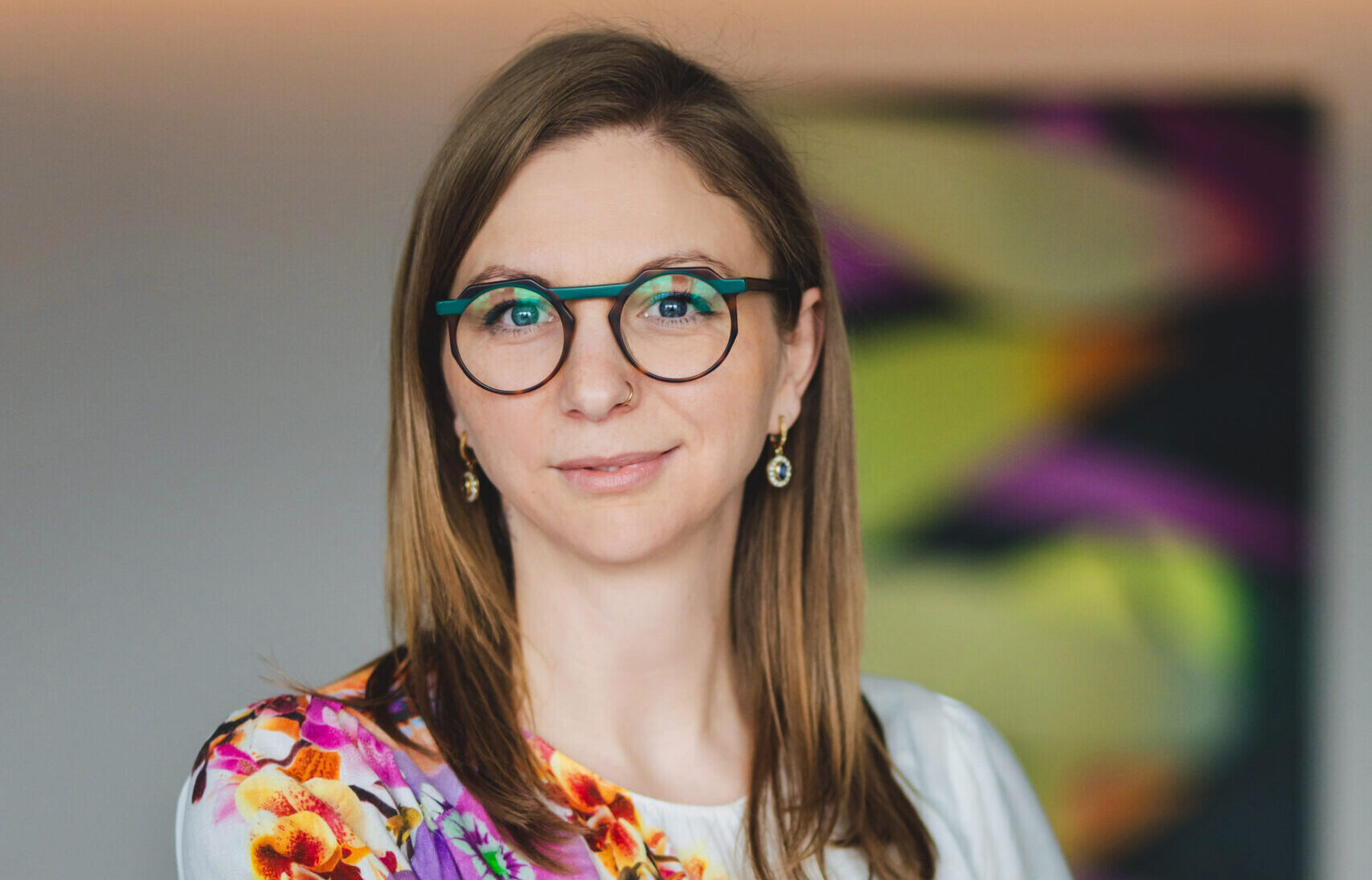
Does the experience of motherhood affect the way people manage others? If so, what exactly changes? Do women become less effective professionally after having a child, or do they develop new competencies that strengthen their leadership role? These questions have long appeared in discussions about the labor market and in daily organizational decision-making. Many stereotypes and concerns—often unspoken—still surround women of childbearing age. Meanwhile, a study conducted by Agata Kołodyńska in 2019 shows a much more complex picture of motherhood and its impact on women in managerial roles.
“Inclusive Revolution”: How to Ensure Gen AI Supports Everyone, Not Just a Select Few?
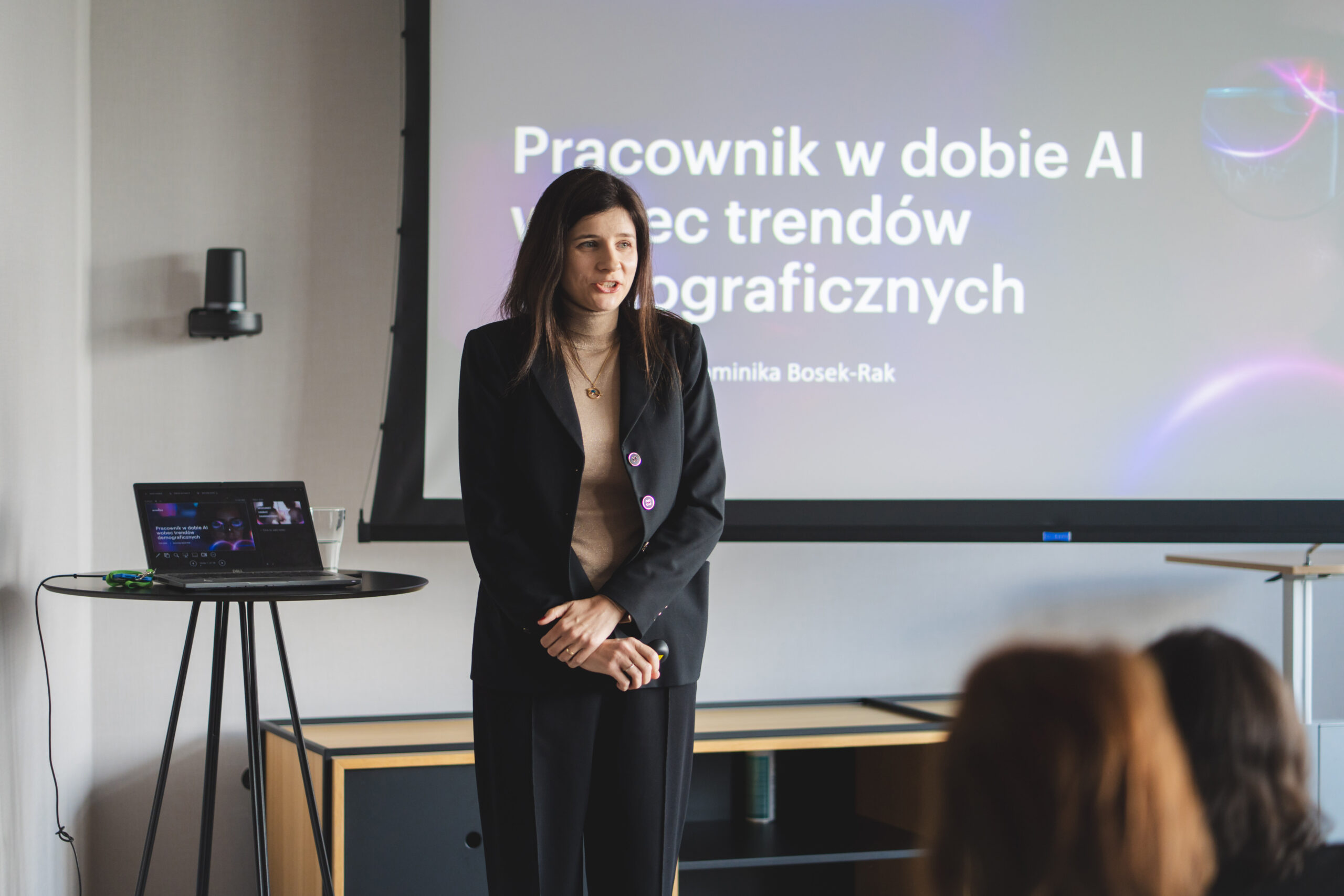
Accenture has published a report titled “The Time for Gen AI: Will the Financial Industry Seize This Opportunity?”, which thoroughly analyzes how generative artificial intelligence will impact the financial sector. At Diversity Hub, we carefully examined this data and drew conclusions that strongly affirm the purpose of our daily activities. This analysis clearly shows: technology is only half the battle. The real challenge lies in how we involve people of diverse experiences, ages, and attitudes towards the digital revolution in this change process. Below, we present our perspective on this report – from a viewpoint that prioritizes equal opportunities, security, and building bridges between technology and humanity.

Neurodiversity in the Company: How to Effectively Implement a Neuro-Inclusive Culture?
Neurodiversity – which includes individuals on the autism spectrum, those with ADHD, or with specific learning needs (such as dyslexia or dyscalculia) – is not a niche issue within the field of diversity, but a fundamental aspect of the functioning of virtually every team.
Four Generations in One Organization – How Volkswagen Poznań Builds an Inclusive Culture in Manufacturing
Four generations working together, rapid technological changes, and a growing need to build an inclusive culture are among the key challenges in the manufacturing sector today. At VW Poznań, the response to these processes has been the "Culture 2.0 and Diversity in Production" program, which focuses on strengthening intergenerational dialogue, developing competencies, and creating a work environment based on collaboration, respect, and the inclusion of diverse perspectives.

Future Competencies: From Adaptability to Action
Imagine your team gains access to an advanced AI tool designed to automate half of their daily tasks. What does your team do? Do they wait for a multi-page manual and official training, or do they immediately look for ways to test this tool in practice? In a world changing faster than curricula and training strategies, a traditional approach to competencies is no longer sufficient. Today, adaptability no longer provides an advantage—it has become the standard. The true currency of the future is the ability to act effectively under conditions of uncertainty.

Accessible Hospitality: Why DEI is Transforming the Hotel Industry from Within
Modern hospitality redefines hospitality – today it's no longer just about standards, but about mindfulness and an authentic guest experience. DEI, or diversity, equity, and inclusion, ceases to be an industry acronym and becomes a daily practice: from communication methods to service design. It is thanks to DEI that a hotel can become a place where everyone feels 'at home' – regardless of their needs or identity. Inclusive hospitality not only builds guest loyalty but also strengthens teams, reducing turnover and restoring meaning to relationship-based work.

Talent as the common language of an organization. How Egis Polska is building a culture of inclusion based on the Gallup method
In the demanding pharmaceutical industry, is there one ideal employee model? The experience of Egis Polska shows that success lies in a completely different place – in the conscious utilization of each person's unique talents within the team. Moving away from rigid patterns towards the Gallup methodology, the organization transformed its approach to diversity, turning potential conflicts into effective collaboration. In the interview below, Monika Świerszcz (HR Department Manager), Izabela Brzezińska (External Communication Specialist), and Maja Latosińska (HR Projects Manager) at Egis Polska discuss how working with talent maps supports equal opportunities, helps overcome skepticism, and builds authentic engagement that allows the company to respond agilely to market turbulence.

Age Management in Organizations: A Survival Strategy in the Era of Generational Tsunami
Most companies treat age diversity as a communication challenge. We know it is primarily an operational risk. In the face of a shrinking labor market and the impending retirement tsunami, age management becomes a business survival strategy. At Diversity Hub, we move away from superficial generational chatter. Instead of perpetuating stereotypes about "Gen Z" and "Boomers," we implement systemic solutions that protect critical knowledge in the organization, unlock "entrenched" structures, and eliminate costly ageism* and adultism*. Discover how we transform generational diversity into your strongest asset across 4 organizational levels.

Hiring people with disabilities – how to do it right? Discover our proven model.
Many employers employ or want to employ persons with disabilities, but they are often held back by key questions: "are we ready for this?", "are we doing this right?". A conscious policy of employing persons with various types of disabilities is a holistic process encompassing many spheres of organizational functioning. It is therefore no wonder that employers experience anxiety about making mistakes or overlooking important legal and organizational aspects. Our work model was created to transform this uncertainty into a professionally planned process, giving you and your team a complete sense of security and confidence that you have taken care of everything.

How to Build a Company Together, Fairly, and Transparently? The Device Europe Example
As part of our collaboration with Device Europe – a technology company operating in the European market – we had the opportunity to take a closer look at an organization that consistently builds its position based on quality, innovation, and long-term development thinking. Although the company has approximately 45 employees, the scale of its DEI (Diversity, Equity & Inclusion) strategy resembles that of mature, much larger organizations. What stands out is not only a declarative approach to equality and inclusion but, above all, a solid foundation of policies, procedures, and conscious management decisions that genuinely translate into organizational culture.

Universal Design: why good processes support everyone
Often in our work, we encounter resistance due to the belief that DEI activities only benefit selected groups. In the case of HR processes - such as recruitment, promotion, or feedback processes - striving to make them fair, inclusive, or transparent is sometimes perceived as an activity that is meant to give an advantage to certain people (e.g., women). So how do we design activities that are fair and effective, while not creating solutions that may be perceived as favoring selected people? How do you mitigate the risk of potential inequalities in your organization? Our answer is
Universal Design (UD).
When the camera helps you understand: a conversation about the making of a film about neurodiversity in Orange
We talk about the behind-the-scenes development of a film on neurodiversity in Orange. I am glad that Sylwia Sikorska-Ney shared the story of the project, which shows that openness to different ways of thinking can be a strength of an organization. This film is not just an image - it is a manifesto of authenticity and empathy in the workplace. Its originator and co-creator talks about where the idea came from, what the preparations looked like and what this project has changed in the company.

Training you want to come back to: e-learning on inclusive recruitment in Orange
Large organizations face the challenge of effectively training multiple teams working at different locations and rhythms. It is difficult to find a date that is convenient for everyone, and different departments have their own specific work cycles and moments of increased workload.

How to Organize Company Holidays That Unite, Not Divide?
December is a month of extraordinary symbolic significance. For millions of people around the world, regardless of their faith, it is the "season of lights," a time of reflection, community, and giving. Although in many cultures Christmas naturally takes center stage, the December and January calendar is densely filled with rituals and traditions based on various grounds - religious, cultural, and secular. In the context of multicultural teams, the way holidays are celebrated ceases to be a matter of decoration and becomes a test of the company's inclusion policy.

They change to do better: the new energy of mBank’s ambassador groups
mBank decided to completely change the concept of its employee networks - or rather, groups of diversity ambassadors and ambassadors, as this is how these initiatives are referred to at mBank. And while in many organizations they operate on the basis of fixed, thematic groups - for example, dedicated to the LGBT+ community, women or different generations - here they decided on a completely different, innovative approach. What you will read in a moment is a very good example of agile thinking in practice: flexibility, openness to change and courage in adapting activities to the real needs of the working people. This is a story about listening, observing, learning lessons and not repeating patterns just because "that's the way it's always been done."

Inclusion is a bridge to employability. A Guide to the Needs of Students from Vulnerable Groups.
As a VET professional, you know full well that your work takes place at the intersection of different realities and contexts. On one hand, you meet students – each bringing their own life story, attitudes, and learning experiences – and on the other, the specific demands of employers and the dynamic world of the industry. Reconciling these perspectives and acting as a bridge between them is a crucial, yet demanding, task.

Let’s plan 2026 together. How can we help you plan your DEI initiatives, and how can you get involved in our plans?
The end of the year is a time for most organizations to summarize their achievements, but more importantly, to define priorities for the next stage. At Diversity Hub, we believe that effective planning is the foundation for building an inclusive work environment, a mature organizational culture, and a well-designed DEI (Diversity, Equity & Inclusion) strategy. That is why every year we invite you for a free consultation – to jointly prepare your priorities and key actions in the area of DEI and mental health for the upcoming year, and to explore how you can get involved in our planned activities as a recipient, co-creator, or partner.

From inclusivity to a sense of belonging: how AMS is redefining DEIB in a changing world
In a world of constant change and geopolitical instability, AMS has made a conscious decision to consistently focus on Diversity, Equity and Inclusion (DEI) activities, pursuing them through, among other things, our Employee Resource Groups (ERGs).
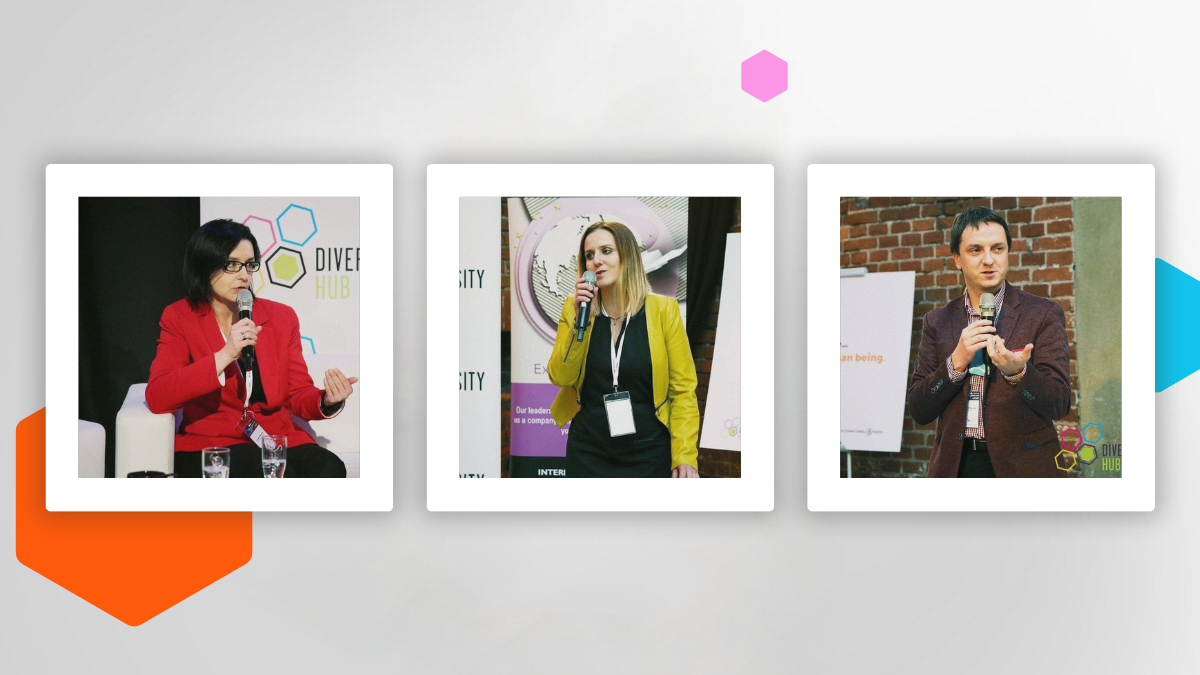
A Decade of DEI in Practice: The Shared Story of Diversity Hub and AMS
Ten years ago, we began our shared journey – with passion, uncertainty, and the conviction that diversity, equity, inclusion, and belonging could truly transform organizations. Today, looking back, we see not only the results of this work in companies and teams, but also in the attitudes of people who believe in it and bring it to life. Together with AMS, we celebrate this decade by sharing memories, experiences, and lessons that show change is possible – when you act together.

Recruitment That Truly Opens Doors – How AMS Builds Inclusive Hiring Processes
At AMS, diversity, equity, inclusion, and belonging (DEIB) are the foundation of our culture. We strive to create a workplace that reflects the diversity of our communities and where everyone feels respected, safe, and empowered to grow.

From Vision to Practice: How to Implement Inclusive Recruitment in Your Organization
Inclusive recruitment is about ensuring that the vision of inclusion and equity is translated into tangible actions throughout the entire recruitment process and in every interaction with candidates. We support organizations in aligning their diversity, equity, and inclusion goals with recruitment processes, making them consistent, transparent, and accessible to all talent. Our approach to supporting organizations in building inclusive recruitment practices is holistic. We do not impose a one-size-fits-all solution but adapt to your needs, offering a pathway that best reflects the specific context of your organization.

Employee mental health and diversity and inclusion in the organisation
Employee mental health is one of the most important elements of performance and well-being in organisations, especially those that prioritise diversity and inclusion. Mental Health Helpline and Diversity Hub experts emphasise how emotional control and open psychological support impact the quality of professional life and the work environment.
Modern Leadership Starts with Care: How to Be a Leader Who Truly Cares About People,
A Guide to Mental Health in the WorkplaceMental health in the workplace has become one of the most pressing challenges for modern organizations. Until recently, topics such as stress, burnout, or depression were marginalized, and many people feared speaking openly about their struggles. Today, we know that these issues affect not only individuals but entire organizations.
Companies that ignore employee mental health face higher turnover, frequent absences, and declining engagement. In contrast, those that treat wellbeing as a priority gain a clear advantage – they build loyal, effective teams and attract top talent.
It’s with today’s leaders in mind that the Mental Health Leader’s Handbook was created – a guide showing how to practically develop an organizational culture that supports mental wellbeing.
How do employee resource groups (ERGs) transform workplace culture? Explore the leader’s guide and build a strong, influential community within your organization.
More and more organizations are recognizing the value of Employee Resource Groups (ERGs), which have become an integral part of the corporate landscape. Companies that strategically invest in this area not only build a positive organizational culture but also gain a real competitive advantage.
Do you want to learn how to create and sustain an ERG that truly impacts workplace culture and business goals?
We have the perfect tool for you!
Workplace microaggressions – a serious problem or excessive sensitivity?
Microaggression is a subtle, often unconscious form of discrimination that increasingly appears in professional environments. Does it pose a real threat to employees’ well-being and organizational culture, or is it rather a sign of oversensitivity? We take a closer look at the facts and opinions, drawing on Diversity Hub’s experience in supporting hundreds of companies.

Inclusive Leadership – Is It Worth It?
Inclusive leadership is an essential element of modern management, enabling companies in Poland to respond effectively to social and business changes. By creating an environment for the full engagement of diverse teams, companies increase innovation, employee satisfaction, and financial performance. Implementing inclusive leadership is worth doing with Diversity Hub.
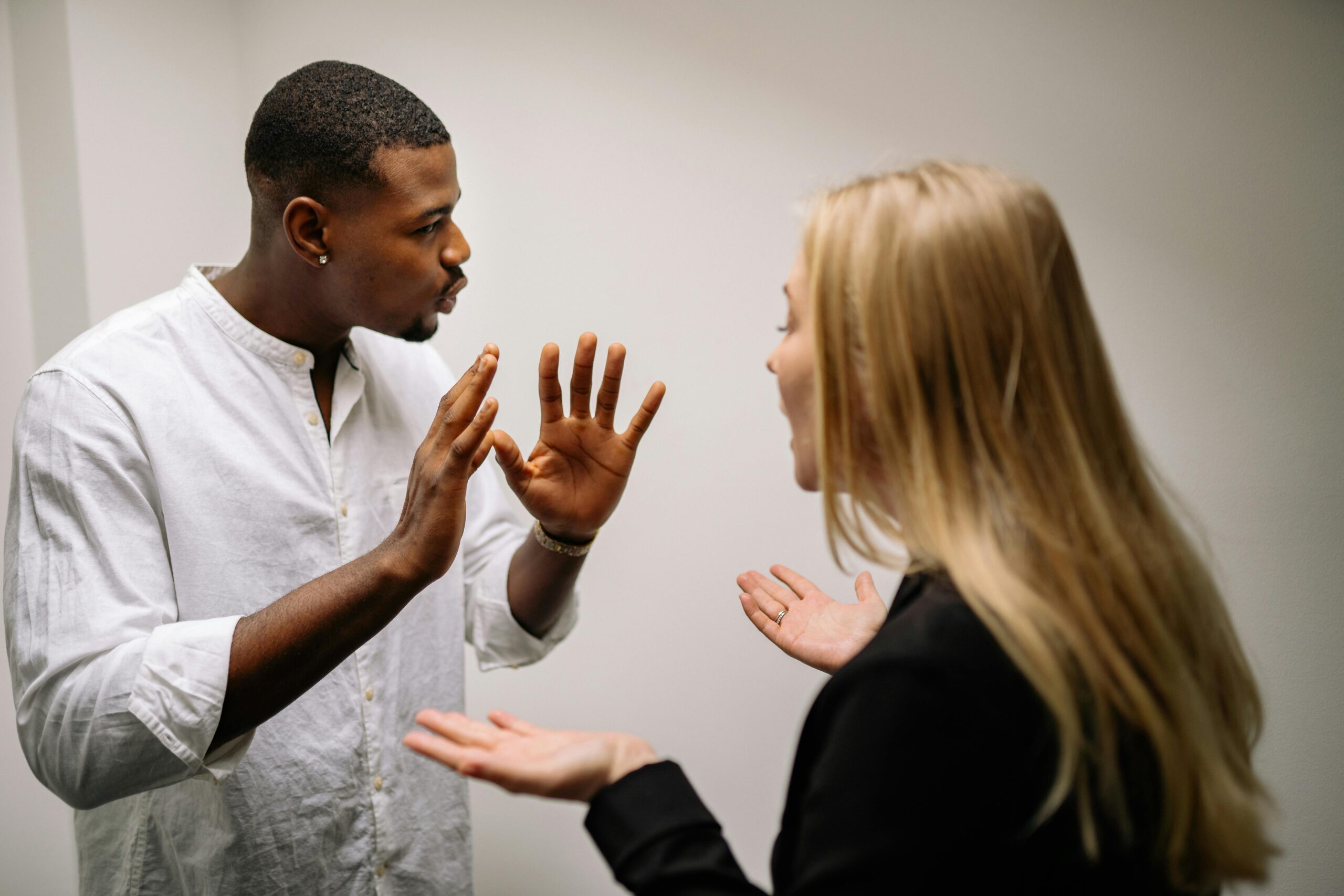
You Don’t Have to Agree – Just Be Willing to Listen.
How to Talk About Diversity with the UnconvincedIn circles of people engaged in diversity, equity, and inclusion (DEI) initiatives, conversations about inclusivity are everyday matters. But what do you do when you encounter someone outside this “bubble”? Someone who doesn’t see the point of DEI initiatives, who treats them as a trend, ideology, or excessive political correctness?

Diversity and Inclusive Culture as an Integral Element of Sustainable Development Strategy. The Role of HR in Achieving ESG Goals.
Sustainable development today is more than just a trendy slogan. It is a long-term approach to managing an organization that considers not only economic benefits but also social and environmental responsibility. The United Nations defines sustainable development as development that meets the needs of the present generation without compromising the ability of future generations to meet their own needs. Achieving this is therefore a matter of intergenerational solidarity, responsibility, and conscious leadership.
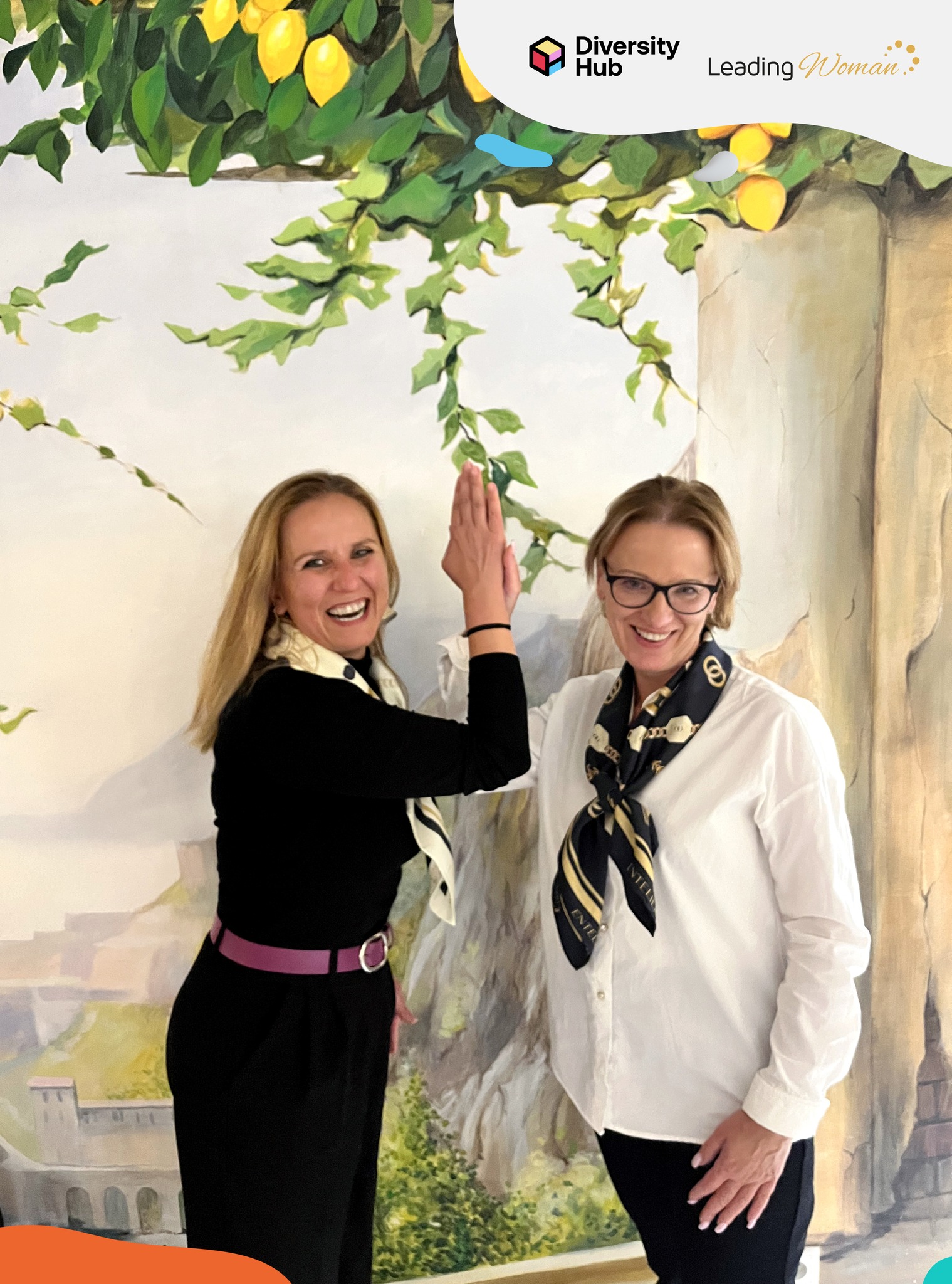
From potential to leadership: how the Leading Women program supports women in business and beyond
We invite you to join us for a conversation about courage, leadership, and the power of women's communities with the creators and experts of the program: Dr. Anna Zaroda-Dąbrowska, founder, CEO, and expert at Diversity Hub, and Agnieszka Bilińska, CEO of Trusted Up, mentor, and author of the Leading Women program.

How Managers Can Stop Wasting Talent
Leadership Crisis and Effective Solutions from Mental Health HelpLineLack of support, undue pressure, uninclusiveness and lack of empathy from executives are some of the main reasons for the loss of key talent.... Mental Health HelpLine recommends coaching sessions for leaders.
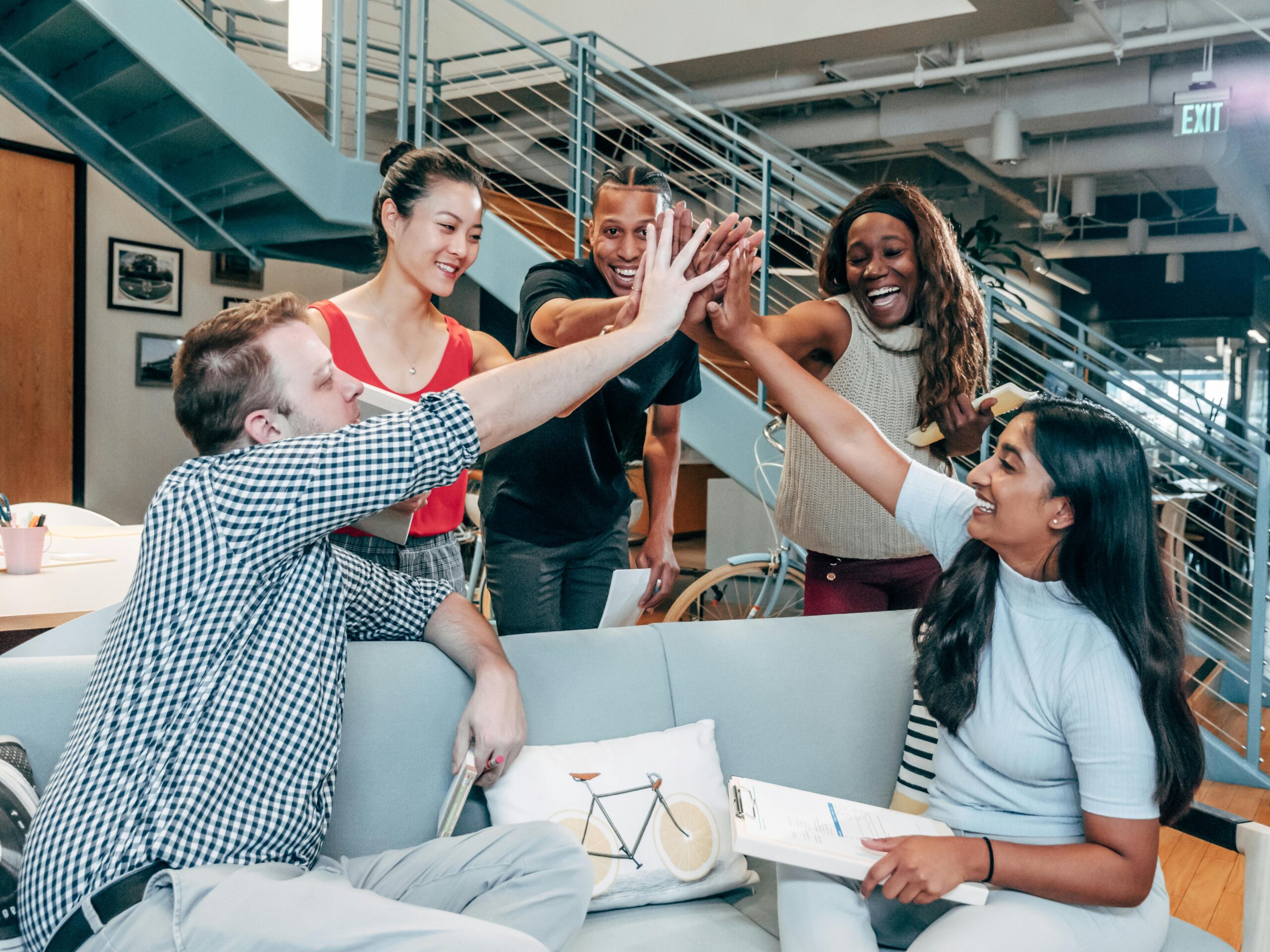
Effectiveness in a Global World Begins with Understanding Cultures
In an era of globalization, intensive workforce migration, and dynamic international collaboration, more and more organizations recognize the need to better prepare their teams to operate in diverse, multicultural work environments. The clash of different values, communication styles, or approaches to work can lead not only to misunderstandings but also to serious conflicts and decreased efficiency. Therefore, the question increasingly arises regarding the relevance of intercultural training – is it genuinely necessary, or is it just a trendy concept aligned with inclusivity?
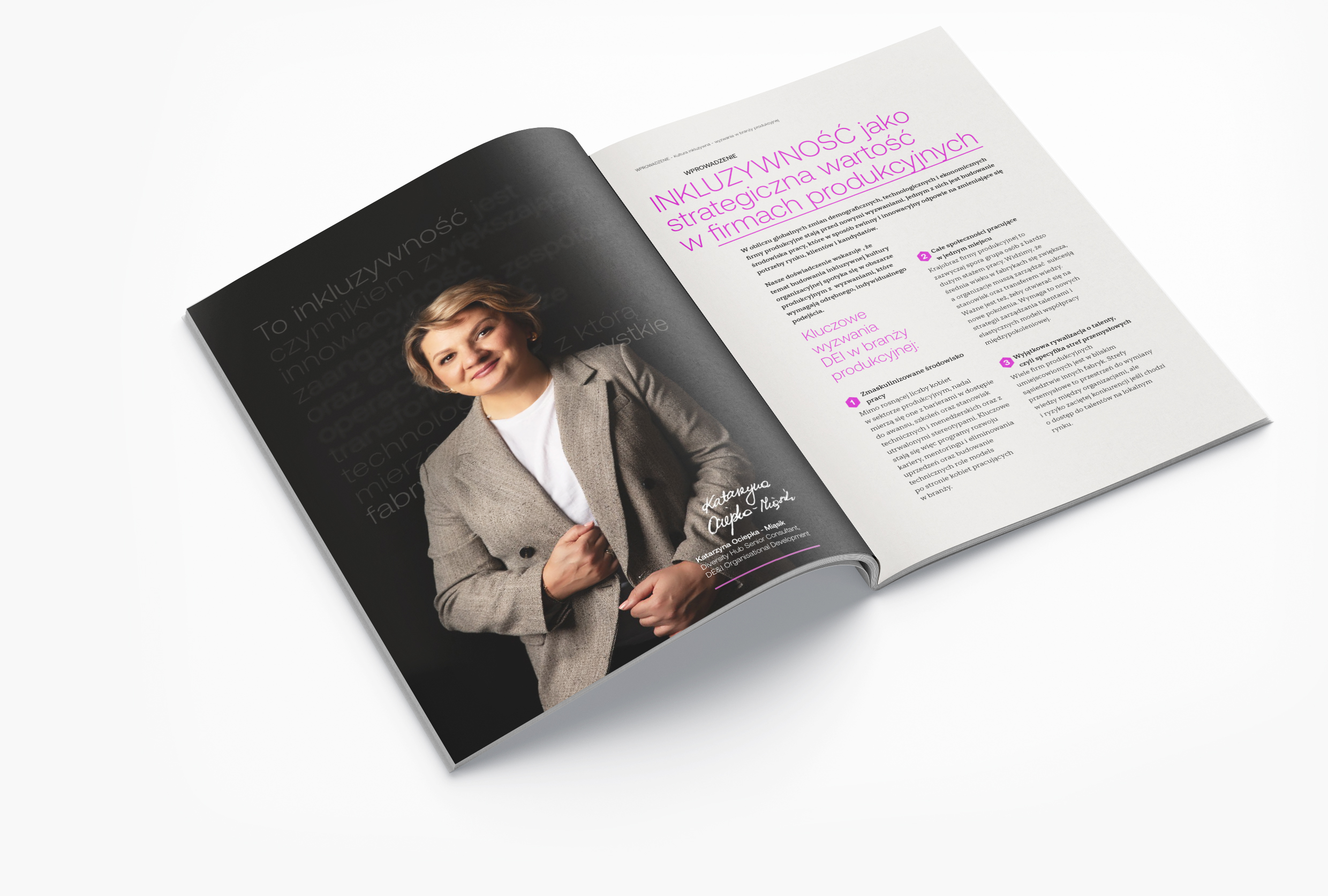
Culture Changemakers: How to Build an Inclusive Culture in Industry?
"Culture Changemakers" is a call to action. It shows that implementing DEI in industry doesn't have to be a revolutionary challenge. It can be a complex process, but it's worth the effort. All it takes is to start—step by step—by understanding the needs of the people we work with.

How to Build an Inclusive Culture in Manufacturing Plants? Challenges and Best Practices
Creating an inclusive workplace culture in the manufacturing environment is a challenge — but also a great opportunity. Building a workplace where everyone feels respected, seen, and safe is not only ethically right but also makes strong business sense. In this article, we present how industry leaders in Poland are successfully implementing DEI (Diversity, Equity, Inclusion) practices. We are the first in Poland to explore DEI in the manufacturing sector and have invited leading companies to share their experiences.
Neurodiversity in Education and Work: Unlocking Potential Beyond the Conventional Approach
Diversity in the workplace is becoming the norm — more and more organisations are prioritising equality across gender, age, and nationality. Yet there’s still a form of diversity that remains largely overlooked: neurodiversity. ADHD, autism spectrum, dyslexia, dyspraxia — these are not just clinical terms. They represent the everyday reality of hundreds of thousands of people in Poland and millions across Europe. Their unique skills, work styles, and ways of thinking can be a major asset — if we allow them to thrive in environments that understand and support them.
Neurodiversity Pride Day: A celebration of neurodiversity and inclusivity.
Neurodiversity Pride Day is a global movement that demonstrates the value of diverse ways of thinking. Neurodiverse people bring unique creativity, innovation and fresh perspectives to the world - yet they are still too often burdened by stereotypes, encountering misunderstanding, barriers and lack of systemic support. The movement was born in the Netherlands, an initiative of The Neurodiversity Foundation. Diversity Hub is a proud partner and representative of Chapter Poland.

DEI as a habit. New thinking about DEI in the organization
How do we change the approach to diversity, equality and inclusion so that it becomes more than an "occasional" initiative? Aakanksha Mehra - Project Manager and DEI Ambassador at Heineken Global Shared Services Krakow - talks about how to make DEI a habit.