

We discuss this with Sławomir Gadziński, Senior Specialist at Volkswagen Poznań, member of the “Culture 2.0 and Diversity in Production” project team.
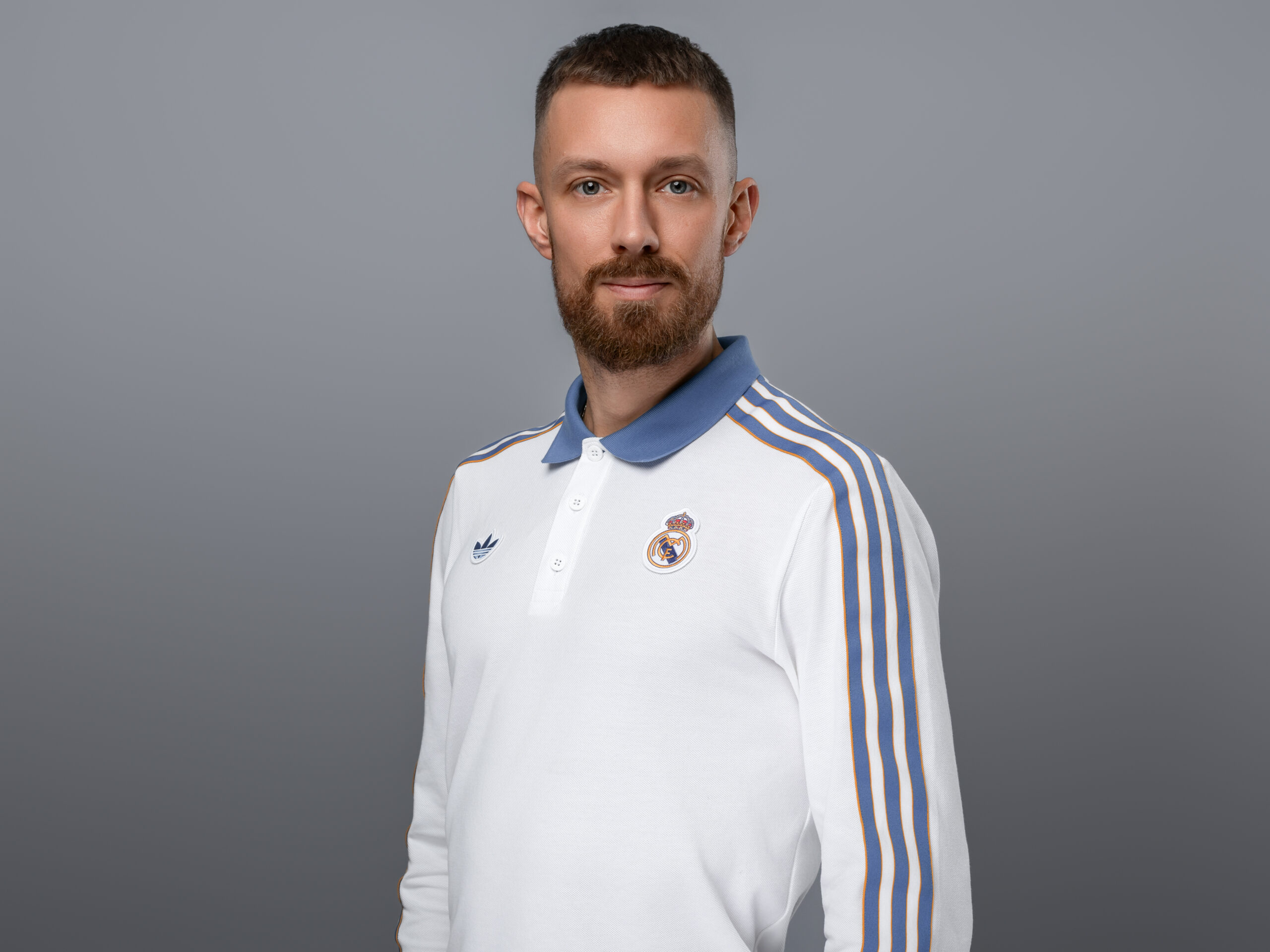
Sławomir Gadziński, Senior Specialist at Volkswagen Poznań.
Diversity Hub: In what context does VW Poznań operate today regarding the age structure of its employees?
Sławomir Gadziński: At VW Poznań, representatives of four generations currently work together, each shaped by different so-called “generational experiences.” Knowledge and awareness of what has influenced diverse approaches to work, combined with the ability to recognize the unique competencies of individual age groups that can complement each other, are crucial today.
What is the significance of communication and cooperation in multi-generational teams?
They are becoming crucial in managing multi-generational teams. Differences in communication style preferences and ways of sharing knowledge and experience generate new challenges in daily work.
The presence of younger individuals in teams necessitates a modification of management style – towards greater openness, transparency, and a partnership approach to employees.
How do automation and robotization affect competencies, including the need for soft skills development in manufacturing?
With the implementation of automation and robotization in production processes, there is a significant shift in the approach to work. New technologies enable production optimization, but at the same time, they create a need for retraining and education for employees who previously had no contact with this area.
Transformations in the automotive industry require continuous upskilling from staff in new technologies. The observed changes in attitudes towards work in the market have generated the need to introduce the first program concerning soft skills in the production area to the organization.
Why have knowledge management and transfer become so important?
There is a growing need to create effective mechanisms for knowledge transfer between generations. Older generations possess rich experience that is worth passing on to younger employees, who, in turn, can help in adopting modern tools and technologies.
And that is why the “Culture 2.0 and Diversity in Production” project was created?
Yes, VW Poznań, recognizing the challenges associated with changes in the area of work and inclusive culture in production, launched the “Culture 2.0 and Diversity in Production” project. Its goal was to raise awareness about inclusivity and create space for intergenerational collaboration.
A key element of success was the establishment of a multi-level and interdisciplinary project group comprising 33 individuals: masters, female and male leaders, female and male specialists, and female and male managers from all four plants. Anyone for whom this topic was important could join the group – regardless of their position level.
The aim of this group’s work was to map the challenges related to building an inclusive culture in the manufacturing area, to understand them more deeply, and to design possible and effective solutions. For the first time, joint activities covered all four plants and addressed soft topics and organizational culture.
What development and training activities were implemented as part of the program?
The next step in the project was the implementation of development and training activities. Meetings on production lines regarding generational diversity were conducted based on an expert video prepared by Katarzyna Ociepka-Miąsik from the Diversity Hub Think Tank for 7,000 production employees. Voluntary “Diversity & Inclusion” training sessions were also conducted, covering approximately 3,500 employees over two years.
Dedicated training modules on generational management were also planned for over 500 production leaders and over 200 production masters.
How are the program’s effects assessed so far?
Throughout my professional career, I’ve observed one constant: an employee who cannot be themselves will never give their best to guests or clients. The hospitality industry is bleeding from high turnover, but the remedy is simple: inclusive management.
I believe in the philosophy of being a leader who sees employees as individuals with unique stories and lifestyles. When we create a place where rules are transparent and diversity fuels creativity, people stop looking for other jobs. They stay not because they have to, but because they want to be here and feel they belong. Every leader can be different, just as our employees are diverse, and that is our greatest strength.
From my experience, the most wonderful changes begin with small steps and safe questions that open hearts and minds to others.
What specific tools are worth implementing?
The first effects of the implemented program were surprisingly quick to observe. The activities met with great interest and openness from participants, which translated into concrete changes in the daily work of teams.
Increasingly, greater openness to exchanging opinions among employees with different lengths of service is visible, as is greater involvement of younger individuals in solving problems on production lines. Leaders have begun to more frequently initiate conversations about generational differences and consciously adapt their management style.
In some areas, there was initially a distance to the topic, but with subsequent actions and the involvement of management, an increase in openness and readiness for cooperation in multi-generational teams is noticeable. This is the best proof that working with differences is today one of the key sources of organizational effectiveness – and a starting point for further broadening perspective and addressing other important topics.
What benefits does intergenerational cooperation bring to VW Poznań?
Intergenerational cooperation offers the chance for greater innovation in optimizing production processes, better resolution of technical, quality, and production problems, and an increase in creativity and the number of rationalization ideas. In a survey conducted after the training, as many as 96% of respondents rated them as valuable and very useful.